

Images: Flavio Karrer & HANK SERVICES
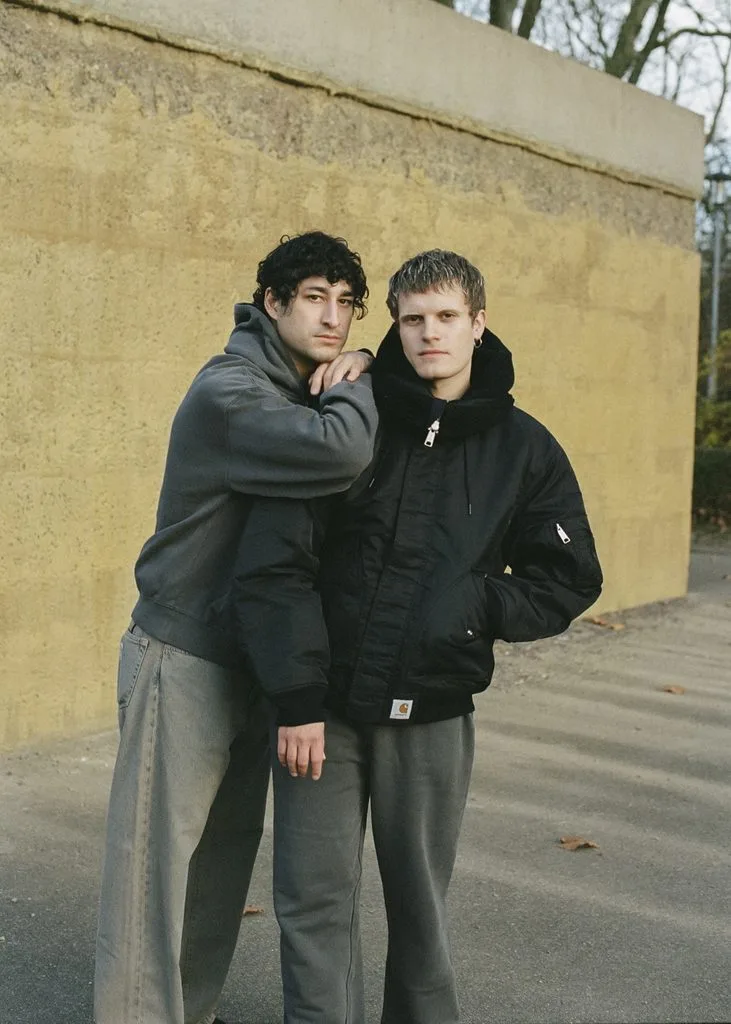
Three years on from their Mutualism EP, Zurich-based duo Atrice have unveiled their debut album, Default Settings. Released via Munich imprint Ilian Tape, the project is a detour from their usual modus operandi. Known for its dubby, bass-heavy signature, their music exists within a liminal space somewhere between sound art and the dancefloor, and has been picked up by the likes of Ozelot Records and untitled unknown. The Swiss-Colombian artists have slowed things down this time around, however, offering an aperture into their sonic world outside of the club.
A year’s worth of artistic research went into Mutualism, leading the pair down a rabbit hole of 3D sound sculpting and multimodal FX chain design—the aim, to create depth and complexity without overstimulation. Atrice’s flair for artistic research is rooted in their academic backgrounds and has been a concurrent theme in their development as artists.
Across its twelve tracks, Default Settings melts powerful basslines, ambient textures, and fleet-footed drum programming into sublimely mixed psychedelic soundscapes, all the while bringing a softer tonality and a more spacious sonic image into the fold. It’s intelligent techno at its finest. We kicked off our interview with an introduction to the early sounds that shaped them…
What were your formative musical experiences?
We both started out as instrumentalists: one of us played drums for 13 years, mostly jazz; the other played electric guitar for 12. In high school we ended up in a band with friends, playing very shitty punk, ska and reggae. Later came the two things that really shaped Atrice: feeling bass physically in front of big sound systems, and discovering acousmatic music, where the sound itself becomes the material.
Online, it’s implied that you both have degrees in music theory, sound art, and composition. Is that how you both met?
No, we met in high school, through music and mutual friends. The degrees came later and went in different directions, one of us into Sound Arts and Computer Science, the other into Audio Design. We brought those perspectives back into something that already existed.
When did you decide to team up and make a concerted effort with Atrice?
It happened pretty naturally. One of us got into modular synths and production through a school project and asked the other to help with some drum programming. After that, we met every week at one of our parents’ flats, making music and smoking weed until his parents called us for dinner. Atrice was there from the start, just without a name. It got serious step by step: co-founding the MIRAS collective, our first EP on MIRAS in 2020, then Q on Ilian Tape in 2021.
Where did the name come from?
One of us was practising “Beatrice” by Sam Rivers. The sheets of music were lying on top of each other so that only “atrice” was visible. It stuck; one of our first sketches got that name, and eventually we kept it as an artist name.
Talk to us about Default Settings. What inspired this project?
Every machine comes with default settings, the state it’s in before anyone touches a knob. Most of what we do is about leaving those behind. With this album, we flipped the question: what are our default settings? What does Atrice sound like when the music doesn’t have to work in a club? The result is a softer, more inward-looking record that still keeps the physicality and detail we care about.
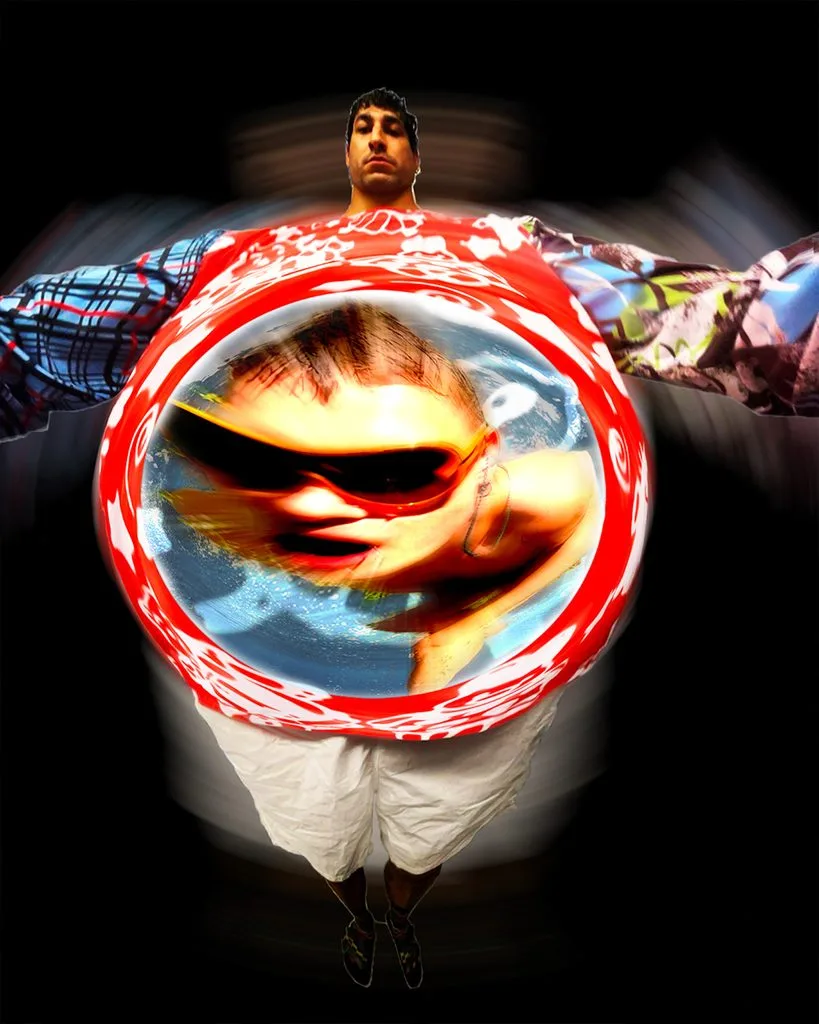
The story came from our friend Hänki / HANK SERVICES, who made the artwork with DGMD.CC studio. While listening, she came up with the phrase “high in the dishwasher”: a household machine running its standard program, and inside it a whole world. The album became a trip through those worlds, all cold and metallic, each with its own air, temperature and time of day. “Bath Tube” is a ride down a giant slide inside a bathtub at dusk, “The Log” a morning chase through a wintry ash forest.
When your Mutualism EP was released, MIRAS wrote that it reflected the culmination of a year-long exploration of compositional techniques and sound design, and acted as a first step towards a debut album. Can you talk about what you learned during that process and how it set the stage for Default Settings?
That text was actually ours: MIRAS is the collective and label we co-founded. Mutualism taught us to sculpt sound in three dimensions and bring musicality and sound design together without overstimulating the listener. We also started building our own effects chains, where one macro moves many parameters at once, which makes everything feel more alive. Above all, it was the first time we finished something meant to be heard from start to finish. That was the step we needed before an album.
This practice of artistic research isn’t something you hear about often. Can you help us understand more about what that process entails?
Mostly it means looking for systems that behave in interesting ways, and listening to what comes out the other side. It’s close to reamping: you send a sound into an amp, a room or a chain of effects and record what happens. We’re drawn to nonlinear systems, ones that react differently depending on what you feed them. Run a loud 30 Hz sine through the same saturation as a texture, and the bass starts pushing everything around, squeezing the other sounds on every cycle and making resonances bloom and choke. It sounds digital and natural at the same time.
So we don’t add these systems at the end; we produce into them. A chain sits on the master bus from the start, and every decision happens in response to how it reacts. The system co-decides the music.
We also love making audible what’s meant to stay hidden. We isolate only what soothe2 removes and throw ten OTTs on it. Inspired by Mr Bill, we resample through the same brutal chain again and again until something entirely new emerges. That chain even pulls sounds out of plugins with no audio going in at all. In a way, that’s the album title again: even at its default settings, with nothing going in, a machine has a sound of its own. None of this is a recipe, though. It points us somewhere, and then intuition takes over.
Do you take inspiration from artists in the research phase, or does your interest lie more with acoustic and electro-acoustic phenomena?
Less from artists, more from other worlds whose ideas we translate into our music. One is acousmatic music, especially Denis Smalley’s spectromorphology. He describes hearing a texture as “falling stones”, then as something that “sounds like falling stones”, then as something that “behaves like falling stones”. That third stage is where we like to be: sounds that don’t exist but still behave like something real. His vocabulary describes how sounds begin, move and end. We use it the other way round, to build them.
Another world is classical recording. Years of recording chamber music taught us how much microphone choice and placement shape a sound, and we translate that into digital work, like putting tube saturation after a reverb to imitate a tube mic. And then there are tools like GRM Tools, made for acousmatic music, which we’ve used for club music for years. They’re really underrated in the club scene.
What made Ilian Tape the right home for it?
Ilian Tape has been a reference for us since the beginning, especially their albums, which showed us what a full-length record in experimental bass music can be. We’ve released three records with them, and they’ve always given us a lot of freedom. For a debut that’s less clubby than anything we’d done before, that trust mattered.
The creative process for an album can be quite intense. How did you both navigate it?
Honestly, it was really intense. We described the album as “years and tears in the making”, and that’s pretty accurate. The first sketches go back to 2022, and over four years we went through countless versions and doubted the whole thing more than once. With music this detailed there’s always one more layer you could change. By the time we were mixing, some tracks had up to 30 versions, and at some point it was hard to even remember what a track was really about. All of that happened alongside touring, other jobs and studies, so even finding real time together was a struggle.
What got us through was each other, and a few people around us. When one of us got stuck, the other took over, and sometimes we literally swapped computers just to hear a track with fresh ears. It helped that we have different strengths. We also learned to escape. Long winter stays in Madulain in the Engadin and at a friend’s place in Tuscany, with nothing to do but make music, are where most of the album came together. And a big shout-out to Laurent New, the brilliant mixing engineer from Basel, who worked closely with us through the final mixing. The album wouldn’t have turned out like this without him.
What’s next for Atrice?
Default Settings is out on October 29th on Ilian Tape. After that, two new projects. migiman is an outlet for more repetitive dance music, somewhere between house, minimal, dub and techno, and we just played it live for the first time in Paris. The other is still under wraps, but it’s built around AI-generated vocals and melodies and leans towards pop. Expect it in late 2027. And of course, more Atrice music.